Research & projects
Handheld AR for Older Adults
Research stageCurrent doctoral research
HostHIT Lab NZ · University of Canterbury
Project supportChina Scholarship Council (CSC)
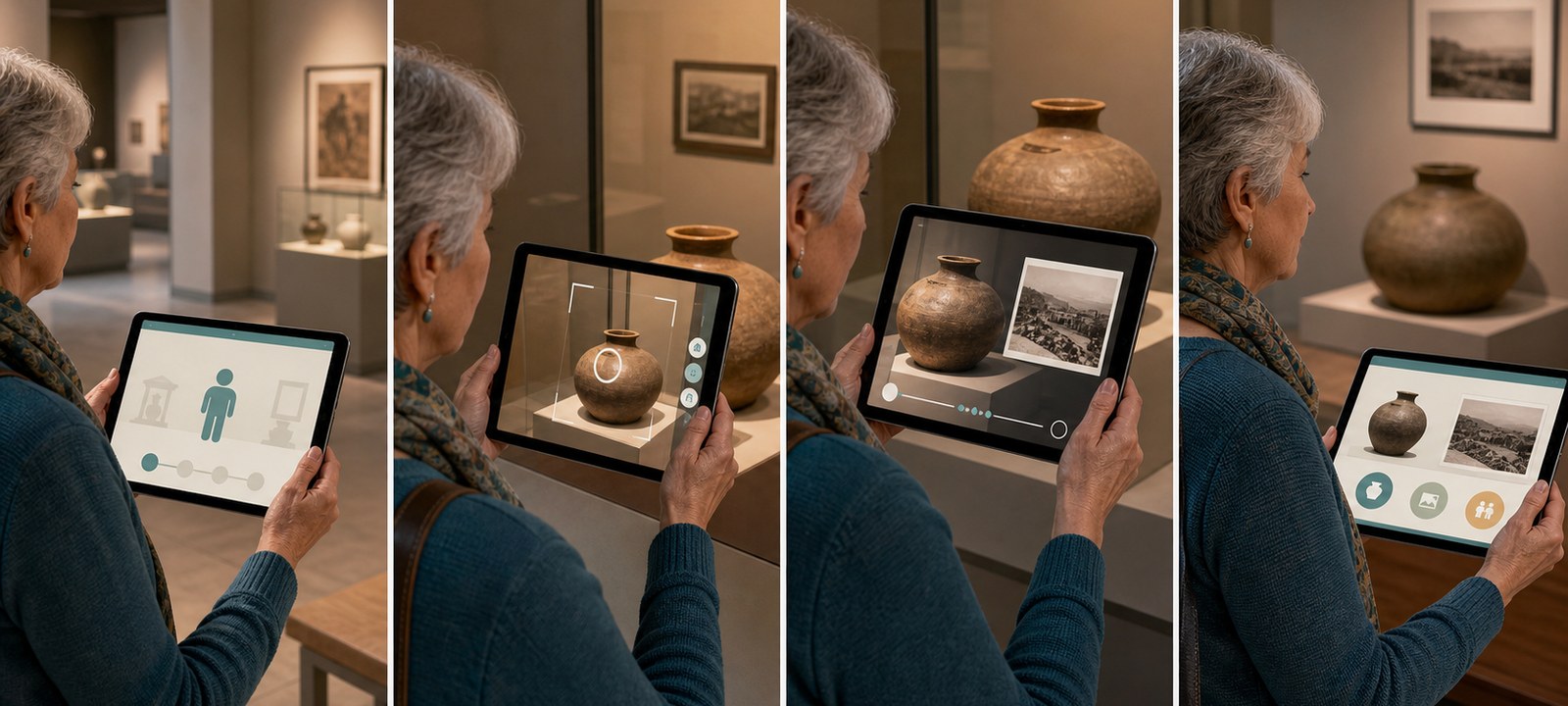
This project explores how handheld augmented reality can be designed for older adults in ways that feel usable, legible, and genuinely worthwhile. It considers common challenges in mobile AR, including screen readability, gesture complexity, camera movement, fatigue, spatial understanding, and the cognitive load created when digital content is layered onto physical surroundings.
The project frames older adults not as passive recipients of simplified technology, but as users with rich life experience, situated needs, and different forms of digital confidence. Through inclusive design thinking, it examines how handheld AR can support learning, memory, cultural engagement, navigation, and social connection while remaining respectful of comfort, autonomy, and accessibility.
Research programme
The doctoral programme follows a three-study progression: identifying interaction barriers and preferences, translating the findings into explicit design requirements, and evaluating the refined experience in a museum context. The research compares interaction approaches while considering usability, cognitive load, user experience, task performance, confidence, and accessibility.
